Every photovoltaic module loses energy before the first photon reaches a solar cell. It happens at the outermost surface — the cover glass — where a percentage of incoming sunlight is simply reflected back into the sky instead of being transmitted to the cell underneath. AR coating solar glass exists to close that gap. For module makers, EPC contractors, and buyers comparing glass suppliers, understanding anti-reflective coating is one of the highest-leverage technical decisions in a bill of materials.
This guide explains what AR coating does on solar panel glass, how online and offline coating routes differ, where tempered AR glass fits, how it pairs with clear solar glass, ultra white glass, and custom solar glass printing, and how to qualify an AR coating supplier in China.
Untreated soda-lime glass reflects roughly 4% of incident light at each air-to-glass interface, and because the index of refraction of glass sits well above that of air, the loss is unavoidable without treatment. On a solar module that figure translates into several percentage points of lost power output — not a manufacturing defect, simply physics.
The problem compounds with angle of incidence. In the morning, late afternoon, and winter months, sunlight strikes the module at a shallow angle, and reflection rises sharply. A module that performs respectably at solar noon can underperform meaningfully at the edges of the day, precisely when rooftop and vertical installations harvest much of their energy.
Soiling makes it worse. Dust, pollen, and airborne particulates change the surface character of the glass and scatter light that would otherwise transmit cleanly to the cell.
Anti-reflective coating is a thin, porous silica-based layer applied to the surface of solar glass. Its purpose is to create a graded transition in refractive index between air and the bulk glass, so that light passing through the interface is transmitted rather than reflected.
In practical terms, an effective AR coating:
Because the gain comes from the glass rather than the cell, AR coating is one of the most cost-efficient efficiency levers available to a module manufacturer. It requires no new cell chemistry and no change to the electrical architecture of the product.
Solar glass producers use two broad approaches to apply anti-reflective coating, and the distinction matters when you are comparing quotations.
Online AR coating is applied during the float glass production process itself, while the glass is still on the line and at high temperature. The coating is fused into the surface as the ribbon forms. The result is a durable, integrated layer with good consistency at scale, well suited to high-volume standard formats.
Offline AR coating is applied after the glass has been produced — typically by roller coating, spray coating, or dip coating, followed by a curing step. Offline routes offer greater flexibility: coating thickness can be tuned, coverage can be applied to glass already cut to size, and the process integrates naturally with tempering, printing, and other downstream operations. Offline coating is also the usual route when a project calls for a combination of treatments on the same panel.
A capable AR coating manufacturer in China will typically offer both and will recommend a route based on module format, volume, tolerance requirements, and the downstream processes your glass has to survive.
The most common question from buyers is whether AR coating and tempering can be combined — and the answer is yes, provided the sequence is engineered correctly.
Tempering involves heating glass to near softening point and quenching it rapidly, which locks the surface into compression and gives glass its strength and safety characteristics. A coating applied before tempering must survive that thermal cycle; a coating applied after tempering must be cured at temperatures low enough not to disturb the temper pattern.
Both orders are commercially viable. Tempered AR glass produced by a supplier with in-house coating and in-house tempering avoids the weakest link in the chain — sending coated glass to a third party for heat treatment, where handling damage and inconsistent cure conditions quietly erode yield. When sourcing, ask directly whether coating and tempering happen under one roof.
For module makers, the commercial case for AR coating rests on four measurable outcomes:
In desert and rooftop environments, the durability of the coating is as important as its initial transmittance. Ask for test evidence covering adhesion, abrasion, humidity, and salt-spray exposure rather than relying on a single transmittance figure.
AR coating is rarely bought in isolation. Most projects combine several glass features in one panel, and the most efficient approach is to source them together.
Clear solar glass and ultra white glass provide the low-iron substrate that keeps absorption losses minimal. Low-iron ultra white glass is the natural base layer for high-transmission modules, because iron content in ordinary float glass tints the glass green and absorbs part of the spectrum the cell needs.
Custom solar glass printing handles the visible side of the panel: busbar masking, edge borders, branding, and patterned finishes. When printing is specified together with AR coating, the print sequence, ink curing temperature, and coating cure temperature must be designed as one process window — otherwise the ink can blister under the coating or the coating can lose adhesion over the printed area.
Custom float glass in non-standard thicknesses lets designers match mechanical load requirements to the mounting system without adding unnecessary weight.
Sourcing these as a coordinated package from one factory eliminates the interface risk that causes most field failures and warranty disputes.
China is the world's dominant source of coated solar glass, and the range in quality is wide. A structured qualification process protects the project:
A supplier that answers all six points with documentation — rather than assurances — is the one worth shortlisting.
Does AR coating reduce the strength of tempered glass?
No. Coating and tempering address different properties of the glass. Correctly sequenced, coated glass is tempered to the same strength class as uncoated glass.
How long does an AR coating last in the field?
Service life depends on coating quality and environment. A properly cured, well-adhered coating is designed to remain effective across the module warranty period. In abrasive or heavily soiled environments, specify and test accordingly.
Can AR glass be combined with anti-soiling treatment?
Yes, and for utility-scale installations in dusty regions it is usually worth doing. Specify both layers explicitly in the purchase order.
Is offline coating only for custom orders?
No. Offline coating suits both custom and standard formats, and it is the usual route when coating has to be combined with printing or applied after cutting.
Can you print on AR coated glass?
Yes, but the print and coating sequence must be engineered as a single process window to avoid adhesion and curing conflicts.
AR coating solar glass is a small layer with an outsized effect on module economics, and the difference between a good and a mediocre coating is usually invisible until panels are already installed. The deciding factors are process control, in-house integration of coating and tempering, and documentation you can verify.
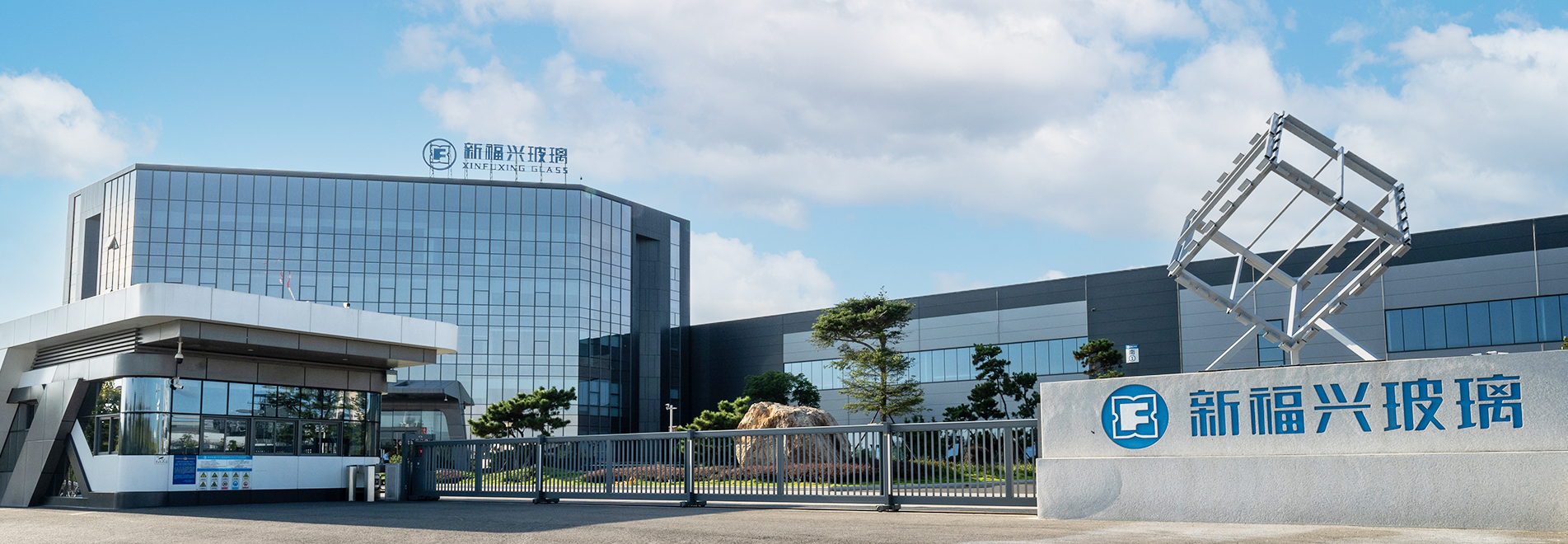
Xinfuxing Glass Industrial Group produces clear solar glass, ultra white glass, tempered and laminated glass, and coated products for photovoltaic and architectural applications, with coating, tempering, and printing controlled in-house. If your project needs tempered AR glass, custom solar glass printing, or a coordinated glass package for a module line, send us your specification and target transmittance — our engineering team will respond with a process recommendation and sample plan.
WhatsApp : +8615059190820
WhatsApp : +8618850736588
Email : elva@xfxglass.com
Email : business@xfxglass.com
Tel : +8615059190820
Tel : +8618850736588